How to Wash a Skort So Both Layers Age at the Same Rate
Quick Answer: The inner short is usually a higher-elastane, denser fabric that takes concentrated sweat and abrasion, while the outer skirt is lighter and takes almost none. Wash inside out on cold with half the usual detergent, never use softener, and always air dry — dryer heat kills the liner’s elastic long before it affects the skirt. Turning it inside out is the single most useful step, since it puts the liner where the water actually reaches.
The skirt still looks new.
The liner has lost its grip, rides up constantly, and is starting to feel thin.
They went through every wash together and came out at different ages.

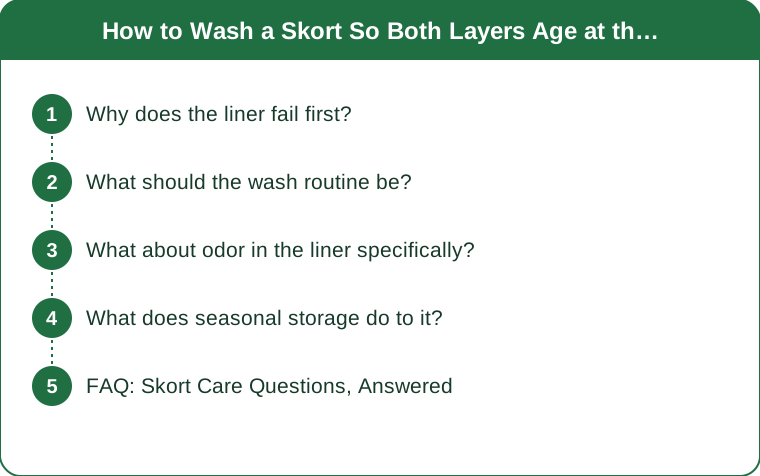
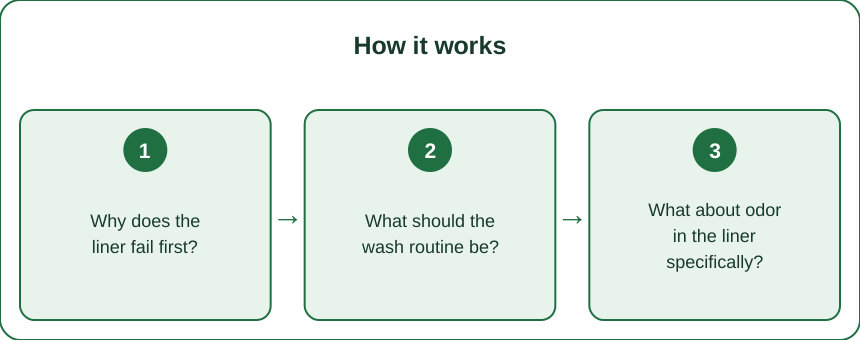
Why does the liner fail first?
Three reasons, and they all point the same direction.
The liner takes essentially all of the sweat and body contact. The outer skirt barely touches you, so the oils, salt, and moisture that degrade fabric are concentrated in one of the two layers.
The liner takes all of the abrasion. Thigh-to-thigh contact happens entirely on the inner short, and that is the mechanical wear that thins fabric and causes pilling.
The liner usually has more elastane, because it needs to grip and stay in place. Elastane is the fiber that degrades fastest, particularly with heat, so the higher-elastane layer is the one with the shorter clock.
Meanwhile the outer skirt is often a lighter woven or a lower-stretch knit, which is more robust in exactly the ways the liner is not.
Which means normal laundry practice is quietly wrong for this garment. Washing it right side out puts the durable layer on the outside where the water and agitation reach, and shields the layer that actually needs cleaning.
What should the wash routine be?
Five steps, and the first one is the one nobody does.
Turn it inside out, every time. This exposes the liner to the water and agitation and protects the outer skirt from abrasion against other garments. It solves both problems in one step.
Cold water. Heat is the primary cause of elastane degradation, and the liner is where the elastane is. Cold water cleans activewear adequately with the right detergent.
Half the usual detergent. Dense synthetic fabric does not rinse detergent out fully, and the residue traps odor and reduces wicking. More detergent makes activewear smell worse over time, not better.
No fabric softener. It deposits a coating that destroys wicking and traps odor compounds, and on a liner that is the entire function.
Air dry, always. Tumble dryer heat is the single most damaging routine step for this category, and it targets the liner specifically. Hang it inside out so the liner dries first.
Optional but useful: a mesh bag. It prevents the skirt catching on zips and hooks in the same load, which is a common cause of pulls in lightweight woven skirts.

What about odor in the liner specifically?
It is the part that smells, and it needs a different approach than washing more often.
Synthetic fabric is oil-attracting and non-absorbent, so body oils sit on the fiber surface and regular cold washing does not fully remove them. The bacteria that produce odor compounds feed on those retained oils.
Which is why a liner can come out of the wash smelling clean and smell again once it warms up. The compounds are still there and simply are not volatile until heat and moisture return.
A periodic white vinegar soak is the practical fix. Half a cup in a basin of cool water, garment submerged for 30 minutes, then washed normally. Every four to six wears is plenty.
An enzyme-based sports detergent is the other option, used as a periodic reset rather than every wash. Enzymes break down the lipids and proteins that ordinary surfactants leave behind.
And never leave it damp in a bag. A worn skort in a sealed gym bag for a few hours undoes everything else on this list — the liner is warm, damp, and enclosed, which is ideal for bacterial growth. Hang it up the moment you get home even if you cannot wash it.
What does seasonal storage do to it?
More damage than most people expect, and it is entirely preventable.
Store it clean. Body oils left in fabric over months oxidize and can set as permanent yellowing and odor, and a skort put away unwashed in October comes out worse in April than it went in.
Store it dry and with airflow. A sealed plastic box in a damp space encourages mildew, particularly in a garment with a dense liner that holds moisture.
Do not hang it by the waistband for months. Long-term hanging under its own weight can stretch the waistband elastic, which is the part you need most. Fold it instead.
Keep it out of heat and direct light. A loft or a sunny shelf degrades elastane over a whole winter, and it fades dye at the same time.
And if you are still wearing it into the cooler months, the wash frequency changes. Cooler-weather wear generally means less sweat per session, so the liner needs slightly less aggressive treatment — but the same cold, gentle, air-dried routine still applies. The one thing that changes is the temptation to use the dryer because air drying is slower in damp weather, and that is the temptation to resist.
FAQ: Skort Care Questions, Answered
How often should I wash it?
After every use involving sweat, and after two or three wears for casual use. Synthetic liners accumulate oils quickly and washing frequency is not the thing to economize on — the method matters more than the interval.
Can I wash it with jeans or towels?
Better not to. Heavy cotton sheds lint that clings to synthetic fabric, and denim abrades lightweight skirt fabric. Wash activewear together, inside out, in a mesh bag.
The liner has stretched out — can I fix it?
Usually not, once the elastane has degraded. Elastic that has lost its recovery does not come back, and no wash restores it. If it is a fit issue rather than a degradation issue, check whether it was always slightly loose.
Is hand washing worth the effort?
For a skort you particularly like, occasionally. Hand washing is gentler on both layers and it does not clean dense synthetic fabric as thoroughly as a machine cycle does. A gentle machine cycle inside out is usually the better routine.
What causes pilling on the liner?
Abrasion, mainly thigh contact and washing against rough fabrics. Turning it inside out actually increases the liner’s exposure to abrasion in the wash, so a mesh bag is the fix that gives you both benefits — liner exposed to water, protected from other garments.
TL;DR:
- The liner takes all the sweat, all the abrasion, and usually has more elastane, so it ages faster than the skirt.
- Wash inside out every time — it puts the liner where the water reaches and protects the outer skirt.
- Cold water, half the usual detergent, no fabric softener, always air dry.
- Use a mesh bag so the liner is exposed to water but protected from abrasion.
- A white vinegar soak every four to six wears strips the oil residue that causes returning odor.
- Store clean, dry, folded rather than hung, and out of heat and light.
Treat the two layers as two garments in the wash and they reach the end of their lives at the same time.
See It in Motion
Seen here: UPF 50+ Adjustable A-Line Running Skort with Pockets — shop it on bubblelime.com
Keep Reading
This article is for general informational and styling purposes only. Fit, sizing, and product availability may vary.