Why a Skort Feels Completely Different Once the Weather Cools
Quick Answer: A skort works because the inner short grips your skin and the outer skirt moves freely over it. In cool weather people add tights or leggings underneath, which replaces skin contact with fabric contact - so the inner short slides, twists, and rides up. Add drier air producing static cling between the layers, and the two-layer system stops working the way it was designed to. Wear it over bare legs with warmer socks, or choose a skort designed for layering. The cold does not break the skort; the extra layer does.
The two-layer design depends on one layer staying put.
Take away the skin and nothing stays put.

Why does a skort work at all in warm weather?
Because the two layers have completely different jobs and different friction.
The inner short does the functional work. It provides coverage, prevents thigh chafe, and stays in place because of skin friction - fabric against skin has a much higher friction coefficient than fabric against fabric.
The outer skirt does the aesthetic work and moves freely. It is meant to swing and drape independently of the short underneath, which is why it is usually a lighter, smoother fabric.
The two layers are attached only at the waist. Everything below is free to move relative to everything else, and that independence is the entire design.
Skin contact is what anchors the system. The inner short grips your thighs, the outer skirt slides over the short - a stable base with a mobile top layer.
In warm weather there is also a little moisture. Slight skin dampness increases grip further, which is why a skort feels most secure in exactly the conditions it was designed for.
Every one of these conditions changes when you add a layer underneath.
What goes wrong when you layer underneath?
Four things, and they compound.
Skin friction is replaced by fabric friction. Two smooth synthetic surfaces slide easily, so the inner short no longer grips anything. It rides up, rotates, and gathers.
The inner short was sized to sit against skin. Adding a layer increases the effective circumference, so a short that was snug becomes tight at the thigh while simultaneously less able to stay put - the worst combination.
Static becomes a genuine factor. Dry autumn and winter air allows charge to build between synthetic layers, and static cling makes the outer skirt stick to the inner short or the tights. The skirt then stops moving independently, which is the entire point of the garment.
Three layers is one too many. Tights, inner short, and outer skirt at the thigh creates bulk exactly where movement happens, and this is where the twisting starts.
And the outer skirt behaves differently in cold air. Lighter woven fabrics stiffen slightly in cold and dry conditions, so the drape changes and the skirt swings less naturally.
The overall effect: a garment engineered around a specific two-layer relationship, with a third layer inserted into the middle of it.
What actually works for cooler weather?
Five options, roughly best to worst.
Bare legs with warmer socks and a warmer top. The skort keeps working exactly as designed, and legs tolerate cold far better than most people expect during activity. Long socks or leg warmers cover the calf without interfering with the skort.
A skort with a longer inner short and no tights. More coverage from the garment itself solves the warmth question without adding a layer. Many brands make a longer-liner version for exactly this.
Tights over the whole thing, not under. A legging worn over the skort keeps the skort’s internal relationship intact and adds warmth on the outside. Unconventional and mechanically sound.
Grippy-hem tights if you must layer underneath. A silicone hem or a textured fabric gives the inner short something to hold onto, which reduces the sliding considerably.
An anti-static approach for the outer skirt. A little conditioner in the wash or an anti-static spray stops the skirt clinging to the layers underneath, which is often the most visible symptom.
And know when to switch garments entirely. Below about 50F for sustained activity, a legging or a skirt-over-legging designed as one system will simply work better. A skort is a warm-weather garment doing its best, and there is no shame in changing kit for the season.
What Nobody Tells You About Skorts in Autumn
The static problem is worse on some fabric combinations than others. Polyester on polyester generates the most charge, while natural fibres and nylon generate far less. If your skort clings, the tights are usually the variable to change.
A skort that never rode up in summer will start to in autumn without anything being wrong with it. It is the layer, not the garment, and people frequently replace a perfectly good skort for this reason.
Longer socks change the proportion as well as the warmth. A crew or knee sock with a skort reads intentionally seasonal rather than like a summer outfit worn late - which matters more than it should for whether you actually wear it.
The waistband takes more load in autumn. With more layers attached at the waist, the waistband is doing more work, and a skort with a thin waistband will feel it. This is where a wider band earns its place.
Wet leaves and damp courts change the friction underfoot too. The whole reason to wear a skort - free movement - is partly compromised by cautious footing in autumn conditions.
And the skirt length that felt right in summer often feels short in cold. Bare thighs in 55F air feel more exposed than the same coverage at 80F, which is a genuine comfort factor and not just perception. A longer style is a reasonable seasonal choice.
FAQ: Autumn Skort Questions, Answered
Can I wear a skort with tights at all?
Yes, and it works better with the right tights. Look for a fitted, slightly textured or matte tight rather than a smooth shiny one, and treat static with a fabric conditioner. Expect the inner short to move more than it does on bare legs.
Why does the outer skirt suddenly stick to my legs?
Static. Dry air lets charge build between synthetic layers, and the skirt is attracted to whatever is underneath. A little fabric conditioner in the wash or an anti-static spray solves it in seconds.
How cold is too cold for a skort?
For active use, many people are comfortable down to around 50F with long socks and a warm top - activity generates a great deal of leg heat. For standing around, considerably warmer. The limit is usually about standing time, not activity time.
TL;DR:
- A skort works because the inner short grips skin and the outer skirt slides over it - two different friction relationships.
- A layer underneath replaces skin friction with fabric friction, so the inner short slides, twists, and rides up.
- Dry autumn air adds static, which makes the outer skirt cling instead of moving freely.
- Bare legs with long socks, a longer-liner skort, or leggings worn over the top all preserve the design.
- Below about 50F for sustained activity, a purpose-built legging system simply works better.
Try long socks with bare legs on the next cool day before adding tights underneath. It keeps the skort doing the one thing it is good at.
See It in Motion
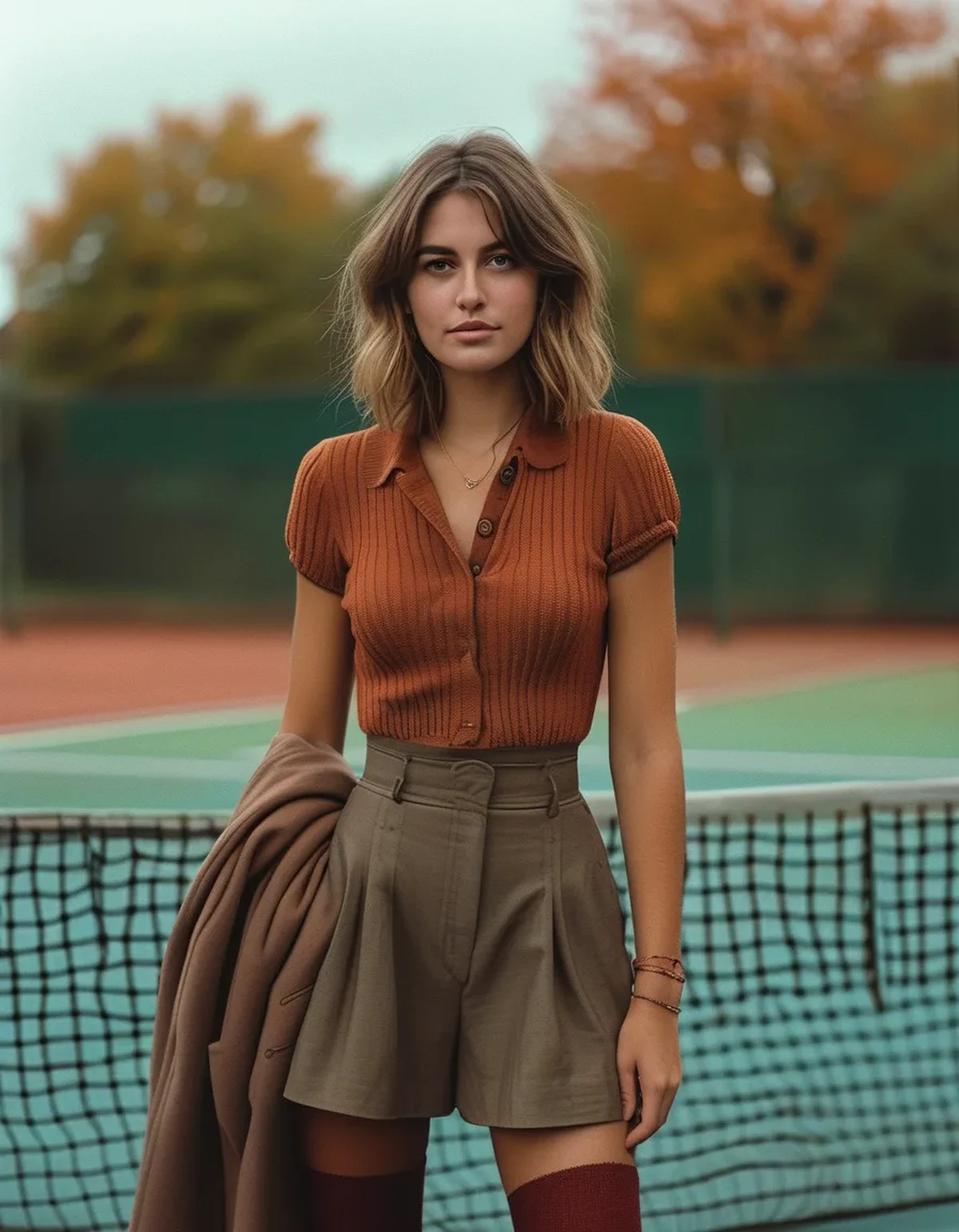
Seen here: High Waist 8” Yoga Shorts — shop similar styles on bubblelime.com
Keep Reading
This article is for general informational and styling purposes only. Fit, sizing, and product availability may vary.