Why a Skort Looks Shorter in Photos Than It Measures
Quick Answer: Cameras shorten anything below the lens. Phone cameras have wide-angle lenses and are almost always held above skirt height, so the skort is photographed at a downward angle and foreshortened - typically losing 10 to 20% of its apparent length. Add a pleated hem that flares outward (making it look wider and therefore shorter) and a waistband that sits higher than you think, and the gap between the tape measure and the photograph is entirely predictable.
None of it means the skort is mislabelled. Here is how to read a listing photo accurately.
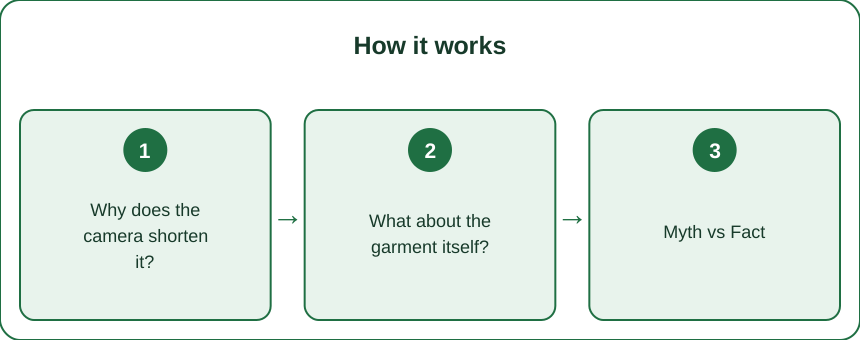
Why does the camera shorten it?
Anything below the lens is foreshortened, and skorts are always below the lens. A phone held at chest height points slightly downward at a skort, which compresses vertical distance in the image. The further from the lens centre, the more compression.
Wide-angle lenses make it worse. Most phone main cameras sit around a 24 to 26mm equivalent focal length, which exaggerates whatever is closest and compresses whatever is further away. In a full-length shot, that is legs and hem.
Camera height decides the whole result. A photo taken from eye level makes a skort look shortest; a photo taken from hip height shows close to its true length. This is why the same garment looks different in a selfie and in a friend’s photo.
Distance matters as much as angle. Standing close with a wide lens exaggerates the effect substantially. Two metres back with a slight zoom is a far more honest representation - and it is why professional product shots are taken from further away.
And retailers know all of this. Some photograph from lower down to make a modest skort look longer; some photograph from above to make it look shorter and sportier. Neither is lying about the measurement - both are choosing an angle.
What about the garment itself?
Pleats and flare read as shorter. A hem that flares outward creates a wider horizontal at the bottom, and the eye compares width to length. A 15-inch pleated skort reads shorter than a 15-inch straight one.
Where you measure from is the bigger issue. Brands measure from the top of the waistband to the hem, but a high-rise waistband sits at the natural waist, several inches above where you would picture it. Same 15 inches, much less coverage than expected.
The inner short is usually shorter than the skirt by an inch or two, so it stays hidden - which means the coverage you actually get is set by the skirt, not the liner. Some brands quote the liner length and some the skirt, and the difference is significant.
Movement flare is not visible in a still photo. Pleated skorts open considerably when you walk or swing, and the effective length at motion is shorter than at rest. For tennis or padel, that is the length that matters.
And fabric weight changes the drape. A light, crisp fabric flares outward; a heavier, softer one hangs closer to the leg and reads longer at identical measurement. This is why two 15-inch skorts can look an inch apart on the same person.
Myth vs Fact: Skort Length
Myth: the brand is being deceptive about the measurement. Fact: the tape rarely lies. What varies is the measuring point - waistband top versus natural waist, skirt versus liner - and the camera angle. Ask which point the number refers to.
Myth: model photos show what it will look like on you. Fact: a model is typically 5’9” or taller with long legs. The same skort covers proportionally less of a shorter leg and reads differently entirely. Height in the listing is the useful number, when brands give it.
Myth: sizing up makes a skort longer. Fact: most brands grade length only slightly across sizes - often half an inch or less between adjacent sizes. Sizing up mainly adds width, and a looser waistband will sit lower, which can actually reduce coverage.
Myth: the inner short guarantees coverage. Fact: the liner is usually shorter than the skirt and does ride up. It prevents exposure, which is not the same as providing the coverage you were picturing.
Myth: mirror selfies are a good way to judge. Fact: they are the worst way - phone held at chest height, wide lens, close distance. That combination maximises the shortening effect.
Myth: pleats always look shortest. Fact: pleats look shortest at rest but often provide better movement coverage than a straight skirt, because they open rather than ride up. Two different problems.
How do I judge length before buying?
Measure from your own waist down. Put a tape at the point where the waistband will actually sit - usually higher than you think - and measure down to where you want the hem. That is your number, not the model’s.
Compare against something you own. Measure a skirt or skort you already wear and like, top of waistband to hem. This single reference converts every listing number into something meaningful and is more reliable than any chart.
Look for photos taken from lower angles or further back, and prefer photos with the model walking. A moving shot tells you far more about real-world coverage than a posed still.
Check the review photos. Customer photos are usually taken badly - close, from above - which makes them the pessimistic case. If it looks acceptable in a bad mirror selfie, it will look better in person.
Ask about the measuring point if it matters. A message asking whether 15 inches is skirt or liner, and measured from where, gets a straight answer from most brands and prevents the most common sizing surprise.
And account for the season. Moving into autumn, skorts get worn with longer socks or over leggings, which changes the coverage question entirely - a length that felt short in July often works fine layered in October.
What lengths actually work for what?
Tennis and padel: 13 to 15 inches with a secure inner short. Movement coverage matters more than resting length here - look for a liner with a grip band at the leg so it does not ride up during lunges.
Golf: 16 to 18 inches is the typical range, and many clubs have their own standards worth checking. A straighter cut reads longer and moves less in wind.
Running and general training: 12 to 14 inches with a compressive liner. The liner is doing the real work and the skirt is a preference, so prioritise liner fit over skirt length.
Everyday and travel: 16 to 19 inches with a softer, heavier drape. This is where a skort stops being sportswear and the fabric matters more than the specification.
And whatever the number, do the movement test at home. Put it on and squat, sit down, climb two stairs, and reach overhead - all four, because they fail in different ways. Sitting is where a liner shows itself; reaching is where the waistband tells you whether it will stay put.
Return it if it fails the movement test. A skort you constantly tug at is one you will not wear, and the tugging habit is the real cost - not the two inches.
FAQ: Skort Length Questions, Answered
Why does my skort look shorter in photos than in the mirror?
Phone cameras are wide-angle and held above hem height, which foreshortens everything below the lens - typically by 10 to 20% of apparent length. The mirror is closer to the truth.
Does sizing up make a skort longer?
Barely. Most brands add half an inch or less of length between adjacent sizes, and a looser waistband sits lower, which can reduce coverage rather than increase it.
Is the length measured on the skirt or the inner short?
It varies by brand, and the difference is often one to two inches. Worth asking directly - it is the most common cause of a surprise on arrival.
What length is standard for tennis?
Usually 13 to 15 inches, with the inner short doing most of the coverage work. Look for a grip band at the liner leg opening to stop it riding during lunges.
How do I compare a listing to what I already own?
Measure a skirt you like from the top of the waistband to the hem and use that as your reference number. It converts every listing measurement into something you can actually judge.
Do pleated skorts run shorter?
They look shorter at rest because the flare creates a wider horizontal at the hem. In movement they often cover better than a straight skirt, because they open instead of riding up.
TL;DR:
- Cameras shorten anything below the lens. Wide-angle phone photos taken from chest height lose 10 to 20% of apparent length.
- The measuring point is the real variable - waistband top versus natural waist, skirt versus liner. Ask which.
- Pleats and flare read shorter at rest but often cover better in movement than a straight cut.
- Sizing up adds almost no length - usually half an inch or less - and a looser waistband sits lower.
- Measure something you already own from waistband to hem. That reference beats every size chart.
- Do the four-part movement test: squat, sit, stairs, reach overhead. They each fail differently.
Mirror selfies are the pessimistic case. If it looks fine in one, it will look better in person.
See It in Motion
Seen here: UPF 50+ Adjustable A-Line Running Skort with Pockets — shop it on bubblelime.com
Keep Reading
This article is for general informational and styling purposes only. Fit, sizing, and product availability may vary.