Why the Inner Short Color Shows Through a Skort More Than You Expect
Quick Answer: Fitting room lighting comes from above and is far dimmer than daylight. Outdoors, light passes through the outer skirt layer and the inner short’s color shows as a shadow or tonal shift — especially with light skirts over dark shorts, and especially when the skirt is stretched over movement. Matching the two layers in tone, not just buying a thicker skirt, is the reliable fix.
The skort looked completely opaque when you tried it on. On the court, in full sun, there was a distinct darker band where the shorts ended.
Nothing about the garment changed. The lighting did.
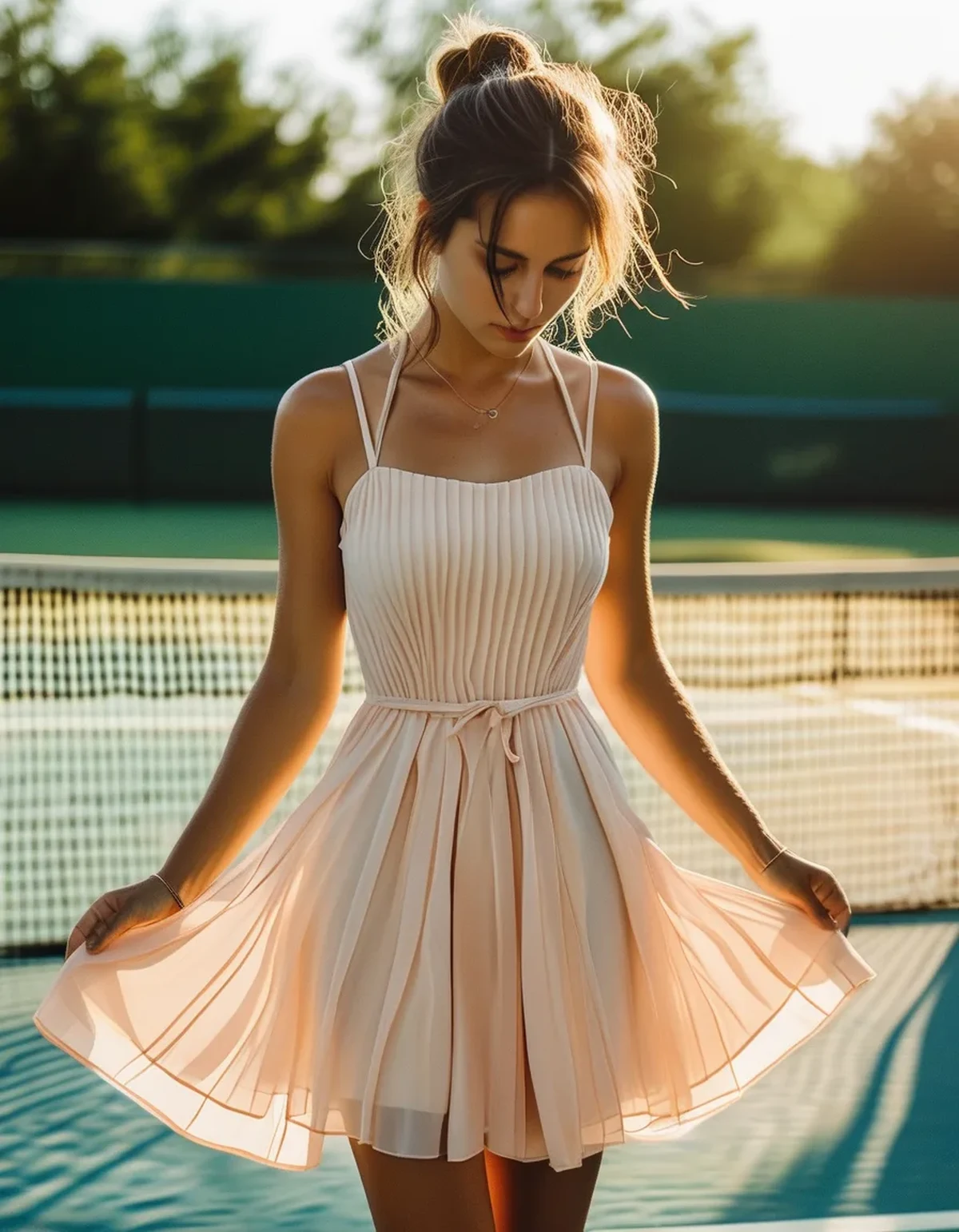
Why does daylight reveal what fitting rooms hide?
Because opacity depends entirely on how much light is behind the fabric, and a fitting room has almost none.
Store lighting is overhead and typically 300-500 lux at the garment. Direct outdoor sun is 30,000 to 100,000 lux. That is a difference of more than a hundred times, and fabric that blocks light adequately at the lower level can transmit visibly at the higher one.
The second factor is direction. Fitting room light comes from above, so it never passes through the front or back of the skirt toward a viewer. Outdoors, light comes from every angle including behind you, which is exactly the condition that turns a fabric translucent.
This is why the classic advice for checking activewear opacity — squat in the fitting room and look in the mirror — catches stretch-related transparency but misses this entirely. That test checks what happens when fabric thins under stretch. It does not check what happens when light comes from behind.
Why does a skort show it more than a plain skirt?
Because there is a hard edge underneath.
A skirt over bare legs transitions smoothly. A skort has an inner short that ends at a specific line on your thigh, creating a sharp boundary between two zones: skirt-over-short and skirt-over-skin.
If the short and your skin tone differ significantly, that boundary becomes visible as a horizontal line through the outer layer — even when neither zone is individually see-through. The eye is very good at picking up edges, much better than at detecting overall translucency.
This produces the specific and common complaint: not that the skort is transparent, but that you can see where the shorts end.
Contrast is the driver:
- Black shorts under a white or pastel skirt: maximum contrast, most visible edge.
- Nude or skin-toned shorts under a light skirt: minimal contrast, generally invisible.
- Matching color both layers: no boundary at all, since both zones read the same.
- White shorts under a dark skirt: visible, but less commonly than the reverse.
What should you actually look for when buying?
A practical checklist, in order of usefulness:
1. Match the inner layer to the outer layer in tone. This is the single most effective factor and the easiest to check on a product page. A light skort with light inner shorts will not show an edge regardless of fabric weight.
2. Check the fabric weight, not just the feel. Anything under about 180 gsm in a light color is likely to transmit in strong sun. Many brands list this; if not, holding it up to a window in the store is a reasonable proxy.
3. Look for a double-layer skirt panel. Some designs have a lining on the skirt itself in addition to the shorts. These are consistently the most opaque.
4. Check the pleats. Pleated skirts are effectively double or triple layered where the pleats overlap and single-layered where they open. In movement, that alternates. A flat A-line skirt is more consistent than a pleated one.
5. Test against a window, not a mirror. Hold the garment up against a bright window and look through it. Thirty seconds, and it predicts daylight behavior far better than the mirror test.
Myth vs Fact: Skort Opacity
Myth: More expensive means more opaque. Fact: not reliably. Premium skorts are often lighter, which is a performance choice that works against opacity. Some budget skorts in heavier fabric are more opaque than technical ones at three times the price.
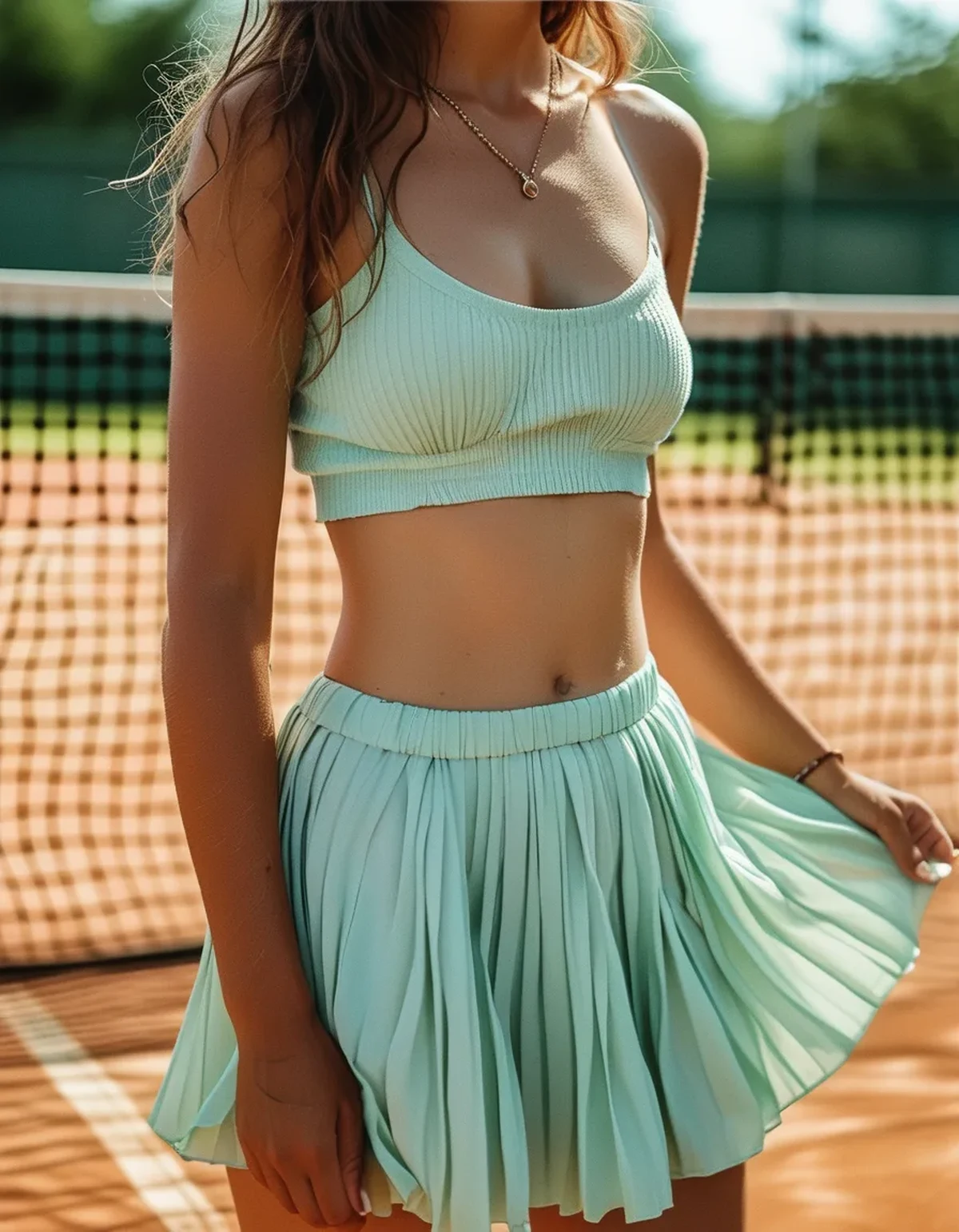
Myth: White is always the problem color. Fact: pale pastels are frequently worse than white. White reflects a lot of light; pale pink, mint, and lilac transmit more and show underlying color as a tint rather than a shadow.
Myth: If it is opaque standing, it is opaque moving. Fact: movement stretches the fabric and reduces its density. A skirt that is fine at rest can thin noticeably during a serve or a lunge, which is precisely when it is being seen.
Myth: Wearing different underwear solves it. Fact: the inner shorts are what shows through, not your underwear, in most designs. Underwear matters for a different issue — visible lines — and does very little for this one.
Does it change through the season?
Yes, and late summer into early fall is when people notice it most.
Sun angle drops as the season progresses. Higher summer sun comes mostly from above, which is closer to the fitting room condition. Lower autumn sun comes in at an angle, passing horizontally through fabric rather than down onto it, and that is the geometry that reveals transparency.
So a skort you wore all June without a thought can suddenly look different in September at 4pm — not because anything about it changed, but because the light started coming from behind you.
This is worth knowing for two reasons. First, it explains a change you might otherwise blame on the garment wearing out. Second, it means the checking should happen in the conditions you will actually wear it in: outdoors, in late afternoon light, with someone standing where the sun is not.
Fabric does genuinely thin with wear as well — repeated stretching and washing reduce density over time — so an old favorite may be doing both at once.
FAQ: Skort Questions, Answered
What color inner shorts are safest?
A tone close to the outer skirt is the most reliable, followed by a mid-tone neutral close to your skin. Black under white is the combination that shows most often and it is unfortunately the most commonly manufactured one.
Can I do anything about a skort I already own?
Not much to the garment itself, but you can change what is underneath if the inner shorts are loose enough to layer a seamless short over in a lighter tone. Beyond that, wearing it in conditions with less backlight — indoor courts, overcast days, morning rather than late afternoon — is the practical answer.
Does washing make it worse?
Gradually, yes. Every wash cycle causes minor fiber loss and elastane degradation, both of which reduce density slightly. Cold washing and air drying slow it considerably. A skort that has been through a dryer thirty times will be measurably more transparent than the same garment air dried, which is one more reason to keep activewear out of the heat.
TL;DR:
- Fitting room light is over a hundred times dimmer than sun and comes from above, so it hides transmission entirely.
- Skorts show an edge where the inner short ends — contrast between the layers is what makes it visible, not overall transparency.
- Match the inner short tone to the skirt, check fabric weight, prefer a lined skirt panel, and be wary of pleats.
- Test by holding the garment against a bright window, not by looking in a mirror.
- Low autumn sun reveals it more than high summer sun, so the same skort can change behavior by season.
The thirty-second habit worth adopting: hold anything light-colored up to a window before you buy it. It is faster than the fitting room squat test, it catches a problem that test cannot see, and it is the reason some people never seem to buy the skort that turns out to be a problem on a bright afternoon.
See It in Motion
Seen here: UPF 50+ Pleated Running Skort with 26” Leggings & Pockets — shop similar styles on bubblelime.com
Keep Reading
This article is for general informational and styling purposes only. Fit, sizing, and product availability may vary.